


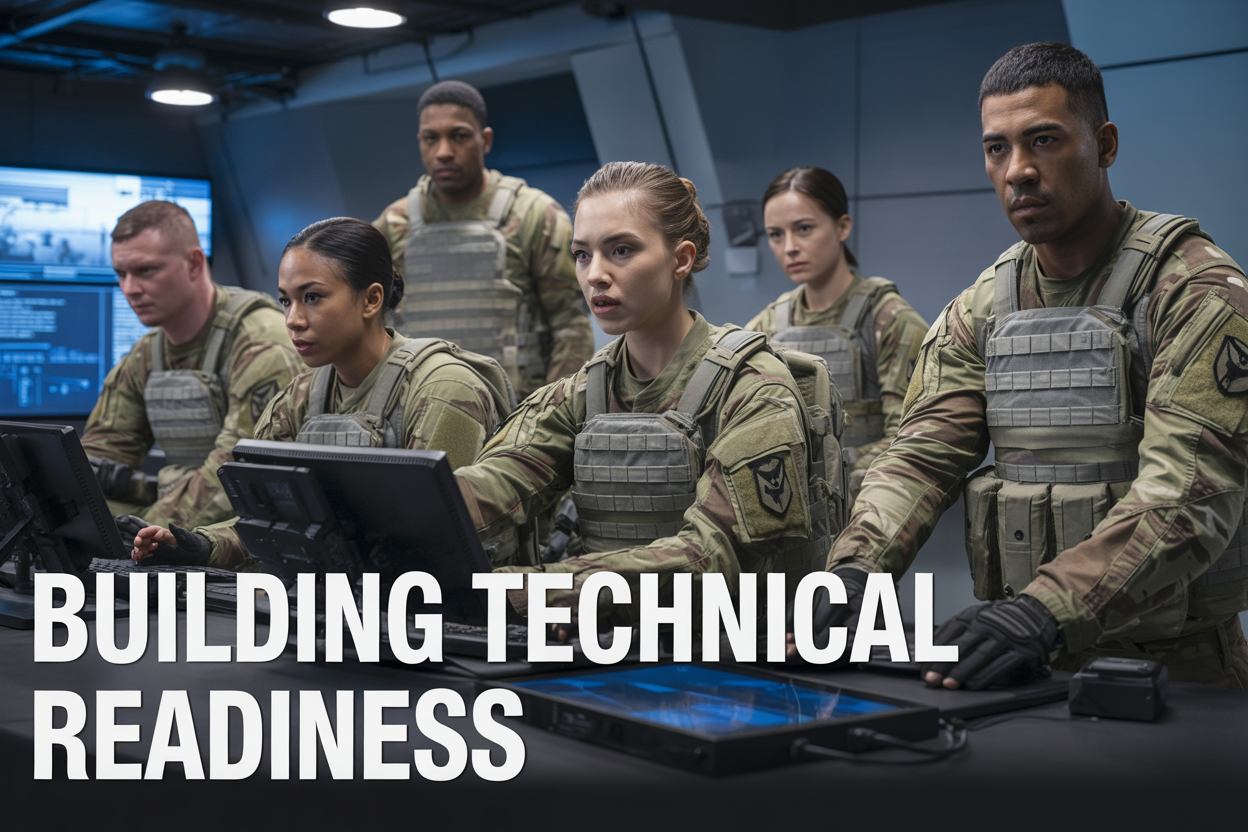
Defense organizations worldwide face mounting pressure to maintain peak operational readiness while adapting to rapidly evolving threats and technologies. Building Technical Readiness: The Importance of Defense Sector Training addresses how modern military training programs can bridge critical capability gaps and strengthen overall defense readiness.
This guide serves defense contractors, military training coordinators, government officials, and organizational leaders responsible for developing and implementing training strategies within the defense sector.
We’ll examine the biggest defense sector challenges affecting training outcomes today, from outdated methodologies to resource constraints. You’ll discover the core components that make defense training programs truly effective, including how military technology integration can transform traditional approaches. Finally, we’ll explore proven methods for measuring training effectiveness and ROI, plus a practical strategic framework that defense organizations can implement immediately.
Modern military preparedness depends on training systems that evolve as quickly as the threats they prepare personnel to face. The right approach to defense training effectiveness can mean the difference between operational success and costly failures in the field.
Current Defense Sector Training Challenges
Skills Gaps in Emerging Military Technologies
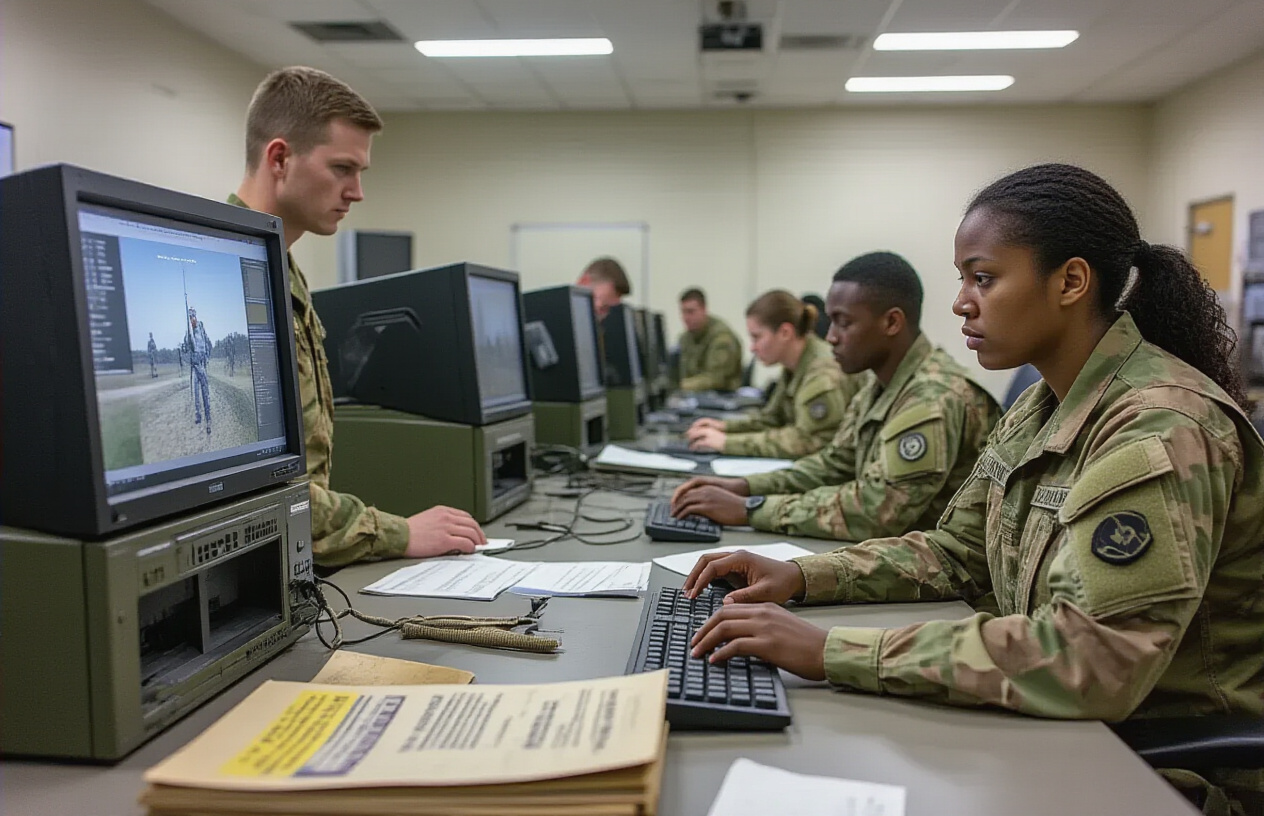
Modern defense sector training faces a critical challenge with the rapid evolution of military technology outpacing traditional skill development. Military personnel struggle to master advanced systems like artificial intelligence, autonomous weapons platforms, cyber warfare tools, and drone technologies. The gap between existing competencies and required technical expertise creates operational vulnerabilities that adversaries can exploit.
Current training programs often lack the depth needed for complex systems integration. Personnel trained on legacy equipment find themselves unprepared for next-generation platforms that require fundamentally different operational approaches. This disconnect affects everything from basic equipment maintenance to strategic decision-making processes that depend on data analytics and machine learning insights.
The shortage of qualified instructors compounds this problem. Many subject matter experts migrate to private sector roles offering better compensation, leaving defense organizations with limited expertise to transfer critical knowledge. Training institutions struggle to recruit professionals who understand both military applications and cutting-edge technology implementation.
Outdated Training Methods Failing Modern Warfare Demands
Traditional defense sector training relies heavily on classroom instruction and predictable simulation exercises that don’t reflect contemporary battlefield realities. These methods prepare personnel for linear, conventional conflicts rather than the hybrid warfare scenarios dominating today’s security landscape.
Modern conflicts require adaptive thinking, rapid decision-making under uncertainty, and seamless coordination across multiple domains simultaneously. However, many military training programs still emphasize rigid protocols and hierarchical command structures that can hinder effective responses to unconventional threats.
The disconnect becomes apparent when examining training scenarios versus actual mission requirements. Personnel train for specific situations but encounter fluid, multi-dimensional challenges requiring creative problem-solving. Current methodologies don’t adequately develop the cognitive flexibility needed for modern warfare complexity.
Training schedules often follow outdated timelines that don’t account for accelerated operational tempos. Military preparedness demands continuous learning and rapid skill updates, yet many programs operate on annual or semi-annual cycles that can’t keep pace with evolving threat environments.
Budget Constraints Limiting Comprehensive Program Development
Defense organizations face mounting pressure to maximize training effectiveness while operating under increasingly tight fiscal constraints. Limited budgets force difficult choices between quantity and quality, often resulting in abbreviated programs that compromise readiness standards.
High-fidelity simulation systems, advanced training equipment, and specialized facilities require substantial upfront investments that many organizations struggle to justify. The cost of maintaining and updating training infrastructure competes with operational priorities, creating a resource allocation dilemma.
Personnel training hours get reduced to accommodate budget limitations, preventing thorough skill development. Accelerated timelines may produce graduates who meet minimum certification requirements but lack the depth of knowledge needed for complex operational scenarios.
Cost pressures also affect instructor-to-student ratios, reducing personalized attention and mentoring opportunities that enhance learning outcomes. Large training cohorts may achieve efficiency metrics while sacrificing individual skill development that military effectiveness demands.
Retention Issues Due to Inadequate Professional Development
Poor training quality and limited advancement opportunities contribute to significant personnel retention challenges across defense organizations. Military professionals seek career development that keeps pace with their civilian counterparts, yet many training programs fail to provide marketable skills or clear progression paths.
Inadequate professional development creates a cycle where experienced personnel leave for private sector opportunities, taking institutional knowledge with them. Organizations invest heavily in initial training only to lose that investment when personnel pursue external career advancement.
The lack of continuous learning opportunities frustrates ambitious personnel who want to expand their capabilities. Static training programs that don’t evolve with technological advances or operational requirements signal to personnel that their professional growth isn’t prioritized.
Recognition and advancement systems often fail to reward training achievements appropriately. When promotion criteria don’t align with training excellence, personnel may view professional development as secondary to other career advancement strategies, undermining overall program effectiveness and military skills development initiatives.
Essential Components of Effective Defense Training Programs
Advanced Simulation and Virtual Reality Integration
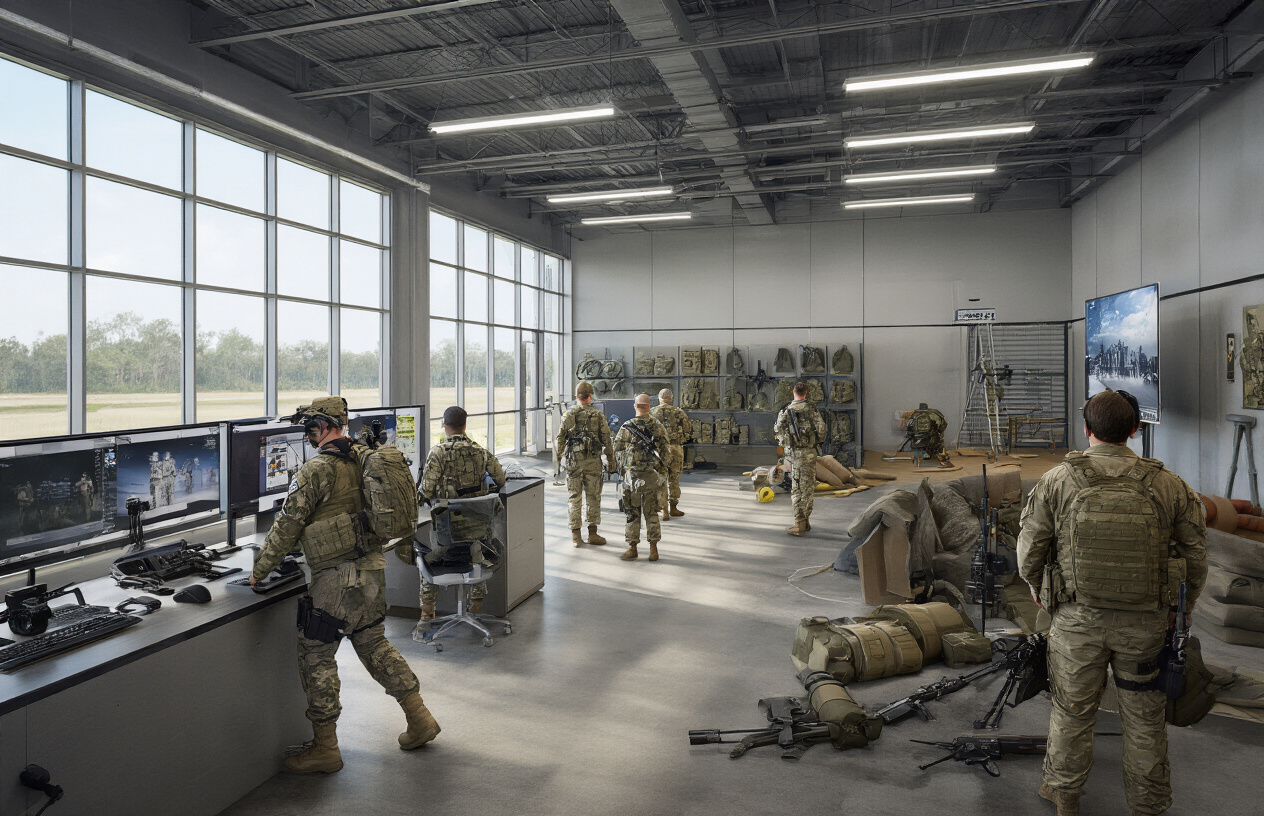
Defense sector training has been revolutionized by cutting-edge simulation technologies that create immersive, risk-free learning environments. Modern military training programs now incorporate sophisticated VR systems that replicate combat scenarios, equipment operation, and strategic decision-making situations with unprecedented realism. These virtual environments allow personnel to practice high-stakes operations repeatedly without the costs and dangers associated with live exercises.
The benefits extend beyond cost savings. VR training enables the creation of scenarios that would be impossible or too dangerous to recreate in real life, such as nuclear incidents, chemical warfare situations, or extreme weather combat conditions. Personnel can experience these challenging environments multiple times, building muscle memory and decision-making skills that translate directly to real-world performance.
Flight simulators have long been a staple in military aviation, but today’s simulation technology encompasses ground operations, naval maneuvers, and even cybersecurity training. Tank crews can practice coordinated movements, naval officers can navigate complex waterways, and cyber specialists can defend against simulated attacks in controlled digital environments.
Cross-Functional Team Collaboration Exercises
Military readiness depends heavily on seamless coordination between different branches, units, and specialties. Effective defense training programs prioritize joint exercises that break down silos and foster communication between diverse military functions. These exercises simulate real combat conditions where success depends on integrated responses from infantry, air support, intelligence, logistics, and medical units.
Modern warfare requires rapid information sharing and coordinated action across multiple domains simultaneously. Training programs now include scenarios where communication systems are compromised, forcing teams to develop backup protocols and alternative coordination methods. These exercises test not only technical skills but also adaptability and creative problem-solving under pressure.
Cross-functional training also addresses the reality of coalition operations, where forces from different nations must work together effectively. Cultural awareness, language barriers, and varying operational procedures become critical training components that directly impact mission success.
Real-Time Scenario-Based Learning Modules
Dynamic, responsive training scenarios that adapt to trainee decisions provide the most effective learning experiences. Unlike static training programs, these modules evolve based on participant choices, creating unique learning paths that reflect the unpredictable nature of real military operations. Advanced AI systems can generate thousands of scenario variations, ensuring that no two training sessions are identical.
These modules incorporate real-world intelligence data and current threat assessments, keeping training relevant to contemporary security challenges. Trainees face evolving situations that require quick thinking, resource management, and strategic adaptation. The scenarios can escalate or de-escalate based on trainee performance, providing appropriate challenge levels for different skill levels.
Real-time feedback mechanisms within these modules highlight decision points and their consequences immediately, reinforcing learning through direct cause-and-effect relationships. This approach accelerates skill development and builds confidence in high-pressure decision-making.
Continuous Assessment and Feedback Mechanisms
Effective military skills development requires ongoing evaluation rather than traditional pass-fail testing. Modern defense training effectiveness relies on comprehensive assessment systems that track performance across multiple dimensions, including technical proficiency, leadership capabilities, decision-making speed, and stress management.
Digital tracking systems monitor trainee progress in real-time, identifying strengths and weaknesses as they emerge. This data enables personalized training adjustments and targeted skill development. Performance analytics help trainers understand which individuals excel in specific areas and may benefit from specialized roles or additional responsibilities.
Regular feedback sessions combine quantitative performance data with qualitative observations from experienced instructors. This dual approach ensures that both measurable skills and intangible qualities like judgment and intuition receive appropriate attention in the development process.
Leadership Development Tracks for Military Personnel
Military preparedness extends beyond technical skills to encompass leadership capabilities at every level. Specialized training tracks identify and develop leadership potential through progressive responsibility assignments and mentorship programs. These tracks recognize that combat effectiveness often depends more on leadership quality than individual technical expertise.
Leadership training scenarios place personnel in command positions during simulated operations, allowing them to practice decision-making, team motivation, and crisis management in controlled environments. The training emphasizes ethical decision-making under extreme pressure, a critical component of military leadership that cannot be learned through textbooks alone.
Different leadership tracks accommodate various career paths within the military structure, from tactical field leadership to strategic planning roles. Each track includes specific competency development goals and measurable outcomes that align with organizational needs and individual career objectives.
Technology Integration for Enhanced Military Preparedness
AI-Powered Training Systems for Personalized Learning Paths
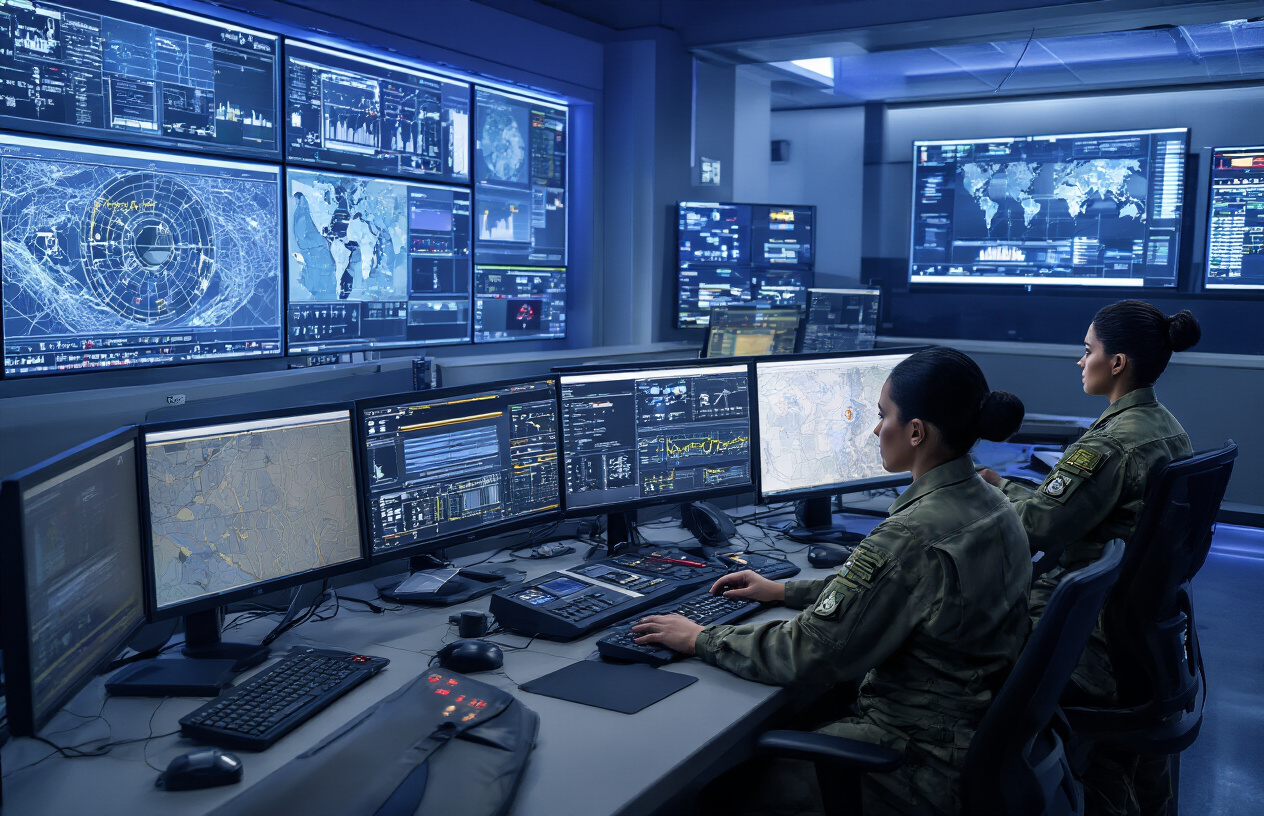
Modern military training programs are embracing artificial intelligence to create customized learning experiences that adapt to individual service members’ strengths, weaknesses, and career trajectories. These AI-driven platforms analyze performance data in real-time, adjusting difficulty levels and content delivery to match each trainee’s learning pace and style.
Machine learning algorithms track completion rates, error patterns, and skill progression to identify knowledge gaps before they become operational liabilities. Smart training systems can predict which personnel might struggle with specific technical concepts and proactively provide additional resources or alternative instruction methods. This personalized approach dramatically improves knowledge retention rates compared to traditional one-size-fits-all training models.
Advanced AI platforms also incorporate natural language processing to create interactive scenarios that simulate real-world mission conditions. These systems generate dynamic conversations with virtual teammates, commanders, and civilians, allowing trainees to practice decision-making under pressure without real-world consequences. The technology continuously evolves based on feedback from completed missions and exercises, ensuring training scenarios remain relevant to current operational requirements.
Defense organizations using AI-powered training report 40% faster skill acquisition and 60% better long-term retention compared to conventional methods. These systems also reduce training costs by eliminating the need for physical resources in many scenarios while providing unlimited practice opportunities.
Cybersecurity Training Platforms for Digital Warfare Readiness
Digital threats have become as dangerous as conventional weapons, making cybersecurity training essential for military preparedness across all service branches. Specialized platforms now offer realistic cyber range environments where personnel can practice defending against actual attack vectors used by hostile actors.
These training environments simulate complete network infrastructures, including command and control systems, communication networks, and critical infrastructure components. Trainees face live-fire exercises against sophisticated malware, social engineering attacks, and advanced persistent threats without risking actual operational systems. The platforms continuously update threat libraries based on intelligence feeds from government cybersecurity agencies and private sector partners.
Role-specific training modules address different aspects of digital warfare readiness:
- Network defenders practice identifying and neutralizing intrusions across complex military networks
- Incident response teams rehearse containment and recovery procedures for various breach scenarios
- Intelligence analysts learn to track and attribute cyber attacks to specific threat actors
- Field operators master secure communication protocols and operational security practices
Interactive simulations place teams in crisis scenarios where cyber attacks coincide with kinetic operations, testing their ability to maintain digital resilience under extreme pressure. These exercises reveal communication gaps and procedural weaknesses that could prove catastrophic during actual conflicts.
Metrics tracking shows personnel completing comprehensive cybersecurity training demonstrate 75% better threat detection rates and respond to incidents 50% faster than those using traditional training methods.
Equipment-Specific Technical Certification Programs
Complex military systems require specialized knowledge that goes far beyond basic operational procedures. Technical certification programs now provide deep-dive training on specific equipment platforms, ensuring personnel can maintain, troubleshoot, and optimize performance of critical defense technologies.
These programs combine hands-on laboratory work with virtual reality simulations that allow technicians to practice procedures on expensive equipment without risking damage or downtime. VR environments can replicate maintenance scenarios that would be impossible to practice regularly, such as emergency repairs under combat conditions or working in hazardous environments.
Certification tracks are designed around actual equipment lifecycles and upgrade schedules:
| Equipment Category | Certification Level | Training Duration | Renewal Frequency |
|---|---|---|---|
| Communications Systems | Basic/Advanced/Expert | 2-8 weeks | Annual |
| Weapons Platforms | Operator/Maintainer/Instructor | 4-12 weeks | Bi-annual |
| Electronic Warfare | Specialist/Senior/Master | 6-16 weeks | Every 18 months |
| Aviation Systems | Component/System/Platform | 8-24 weeks | Annual |
Programs incorporate augmented reality overlays that provide real-time guidance during actual maintenance procedures, reducing error rates and improving safety. Smart glasses display technical manuals, diagnostic information, and step-by-step instructions directly in technicians’ field of view while they work.
Manufacturer partnerships ensure training content stays current with software updates and hardware modifications. Subject matter experts from industry work directly with military instructors to develop scenarios based on real-world failure modes and performance optimization techniques.
Organizations implementing comprehensive technical certification programs report 65% fewer equipment failures and 45% reduction in mean time to repair across their fleets.
Measuring Training Effectiveness and ROI
Performance Metrics Tracking Operational Readiness Improvements
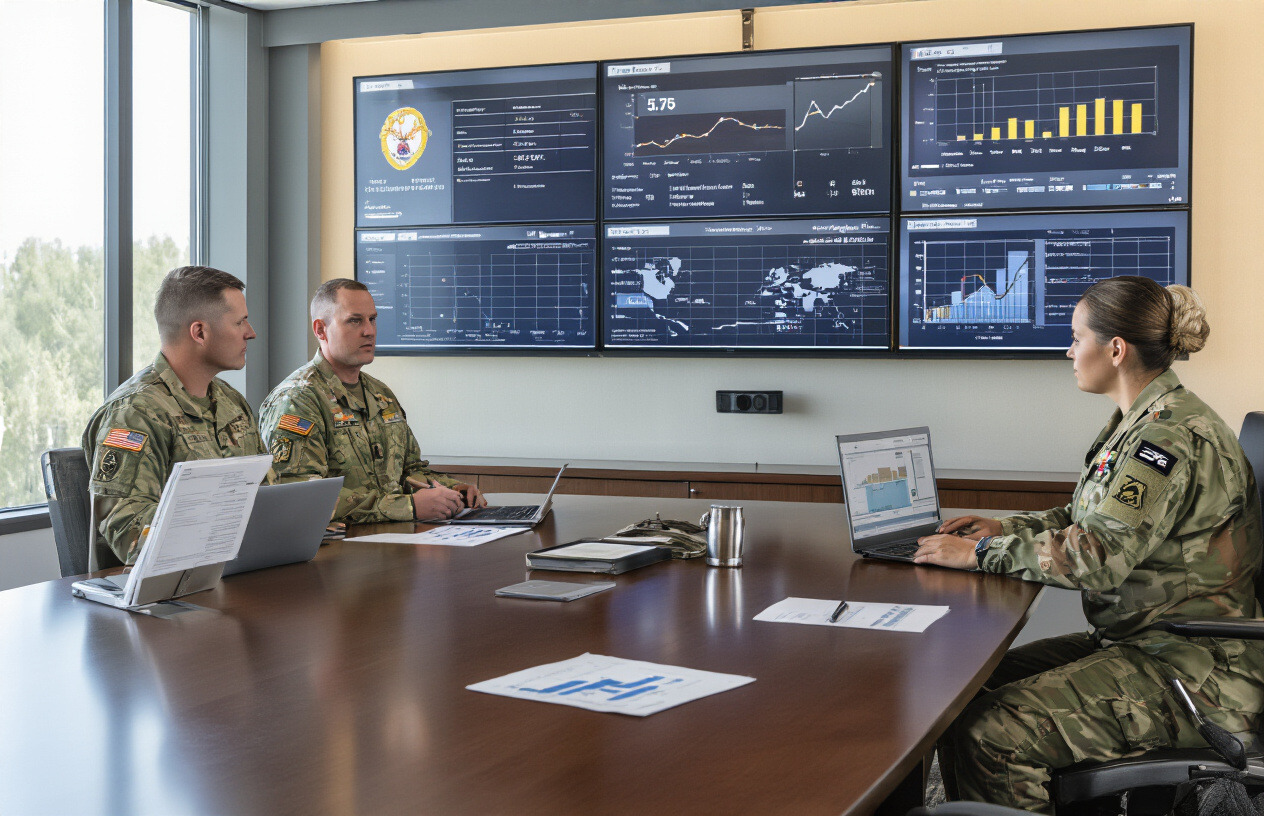
Defense organizations need clear ways to measure whether their training programs actually boost military preparedness and defense readiness. Smart performance tracking starts with baseline assessments before training begins, followed by regular evaluations that show real improvements in combat effectiveness and operational capabilities.
Key performance indicators include response time reductions, accuracy improvements in weapon systems, tactical decision-making speed, and equipment proficiency scores. Military training programs should track these metrics across different skill levels and specializations to identify strengths and gaps in defense sector training.
Digital dashboards and real-time monitoring systems help commanders visualize training progress and adjust programs based on actual performance data. These systems capture everything from individual soldier competencies to unit-level coordination effectiveness, creating a comprehensive picture of military skills development over time.
Cost-Benefit Analysis of Training Investment Outcomes
Every dollar spent on defense sector training must deliver measurable value in enhanced military preparedness. Organizations calculate training ROI by comparing program costs against quantifiable benefits like reduced equipment damage, fewer safety incidents, and improved mission completion rates.
The analysis includes direct costs such as instructor fees, facility usage, and equipment expenses, balanced against indirect benefits like reduced turnover, faster skill acquisition, and improved unit cohesion. Military training ROI often shows returns of 3:1 or higher when programs focus on critical operational skills.
Budget planners use these calculations to justify training investments and allocate resources to the most impactful programs. Historical data reveals that well-designed training initiatives typically pay for themselves within 18-24 months through operational efficiency gains and reduced incident costs.
Long-term Career Progression Correlation with Training Quality
High-quality defense training creates lasting impacts on military personnel career trajectories and leadership development. Service members who receive comprehensive, technology-enhanced training advance faster through the ranks and demonstrate superior performance in leadership roles.
Career progression tracking reveals strong correlations between training investment and promotion rates, specialized assignment opportunities, and retention rates among high-performing personnel. Officers and enlisted personnel with access to advanced military technology integration training often become subject matter experts and mentors for future generations.
These career benefits extend beyond individual advancement to organizational strength, as well-trained personnel contribute to institutional knowledge and training program improvements. The compound effect creates a positive cycle where better training produces better leaders who design even more effective training programs.
Mission Success Rate Improvements Through Enhanced Preparation
The ultimate measure of defense training effectiveness lies in actual mission outcomes and operational success rates. Units with comprehensive training programs consistently achieve higher mission success rates, fewer casualties, and more efficient resource utilization during deployments.
Mission analysis data shows that teams receiving integrated, scenario-based training perform significantly better in high-stress environments. These improvements appear across all mission types, from humanitarian assistance to combat operations, demonstrating the broad applicability of quality defense sector training.
Success metrics include mission objective completion rates, time-to-mission-ready status, adaptability to changing conditions, and post-mission evaluation scores. Organizations track these outcomes to validate training methodologies and make data-driven improvements to their military preparedness strategies.
Strategic Implementation Framework for Defense Organizations
Phased Rollout Approach for Large-Scale Training Initiatives
Successful defense sector training programs require careful orchestration across multiple phases to ensure seamless integration and maximum impact. The first phase typically involves pilot programs targeting specific units or skill sets, allowing organizations to test methodologies, identify potential issues, and refine training protocols before broader deployment.
During the initial phase, defense organizations should focus on establishing baseline metrics and selecting representative test groups that mirror the broader military population. This approach enables trainers to gather critical feedback and adjust military training programs based on real-world performance data. Early adopters often become champions for the program, helping drive acceptance across larger groups.
The second phase expands training to additional units while maintaining close monitoring of outcomes. Defense readiness metrics become crucial during this stage, as organizations can begin measuring improvements in operational capability and skill retention. Training coordinators should establish clear communication channels between different units to share best practices and lessons learned.
The final phase involves full-scale deployment with established support systems, quality assurance protocols, and continuous improvement mechanisms. Defense training effectiveness becomes measurable at this stage, with comprehensive data collection enabling organizations to demonstrate return on investment and justify future training investments.
Partnership Opportunities with Defense Contractors and Tech Companies
Strategic partnerships represent a critical component of modern military preparedness initiatives. Defense contractors bring specialized knowledge of military systems, operational requirements, and industry-specific challenges that complement internal training capabilities. These partnerships often provide access to cutting-edge simulation technologies, specialized equipment, and expert instructors who understand both technical systems and operational contexts.
Technology companies offer different but equally valuable contributions to defense training framework development. Leading tech firms provide expertise in artificial intelligence, virtual reality, data analytics, and cloud computing platforms that enhance traditional training methods. These collaborations often result in innovative solutions that bridge the gap between civilian technological advances and military training requirements.
Successful partnerships require clear agreements outlining roles, responsibilities, and intellectual property rights. Defense organizations benefit from establishing long-term relationships rather than transactional arrangements, as sustained collaboration leads to deeper understanding of military needs and more effective solutions. Joint development programs often produce training systems that neither party could create independently.
Partnership agreements should include performance metrics, cost-sharing arrangements, and scalability provisions. Many successful collaborations involve shared risk and reward structures that align partner incentives with military training program objectives.
Resource Allocation Strategies for Maximum Training Impact
Effective resource allocation in military skills development requires balancing immediate operational needs with long-term capability building. Organizations must prioritize training investments based on mission-critical requirements, threat assessments, and available budget constraints while maintaining flexibility to adapt to changing circumstances.
Personnel allocation represents the largest resource consideration, encompassing both trainees and instructors. High-impact training programs often require experienced military personnel to serve as instructors, creating potential conflicts with operational deployment needs. Successful organizations develop instructor pipelines that maintain continuity while allowing for operational flexibility.
Technology investments should align with training objectives and provide measurable improvements in learning outcomes. Rather than pursuing the latest technological innovations, defense organizations achieve better results by focusing on proven technologies that integrate well with existing systems and training methodologies.
Budget allocation strategies should include provisions for ongoing maintenance, updates, and scalability. Many training programs fail to achieve their potential because initial budgets don’t account for long-term operational costs. Effective resource planning includes contingency funds for equipment replacement, software updates, and program expansion based on demonstrated success metrics.

Defense organizations face complex training challenges that demand innovative solutions and strategic thinking. From outdated curricula to limited technology integration, the current landscape requires a complete overhaul of how we approach military preparedness. The most effective training programs combine hands-on experience with cutting-edge simulation technology, backed by clear performance metrics that demonstrate real value to defense budgets and mission success.
Success in defense training isn’t just about having the latest equipment or biggest budget. It’s about creating comprehensive programs that address skill gaps, embrace technological advances, and continuously measure their impact on operational readiness. Defense leaders who invest in structured implementation frameworks and commit to ongoing evaluation will build training systems that truly prepare their personnel for the challenges ahead. The time to modernize defense training is now – the security of our nations depends on getting this right.